

Key Takeaways
Choosing a dental materials store requires more than comparing catalog size. You need to assess clinical suitability, fulfillment, commercial terms, technical support, and the supplier’s ability to remain useful as your practice develops.
- Match the store’s range to your everyday procedures and planned services.
- Check quality, certifications, compatibility, and product consistency before purchasing.
- Review delivery reliability, backorder handling, returns, and urgent-order options.
- Compare total purchasing costs rather than unit prices alone.
- Choose a supplier relationship that supports dependable, long-term practice operations.
Evaluate the store’s product range
A useful dental materials store should cover the routine requirements of your practice without making every order a separate search exercise. Start by mapping your procedures, specialties, and recurring consumables against the supplier’s catalog. A broad range is valuable only when the products are clearly organized and consistently available. You should also consider whether the store can support your practice as its clinical scope changes.
Consumable materials for everyday procedures
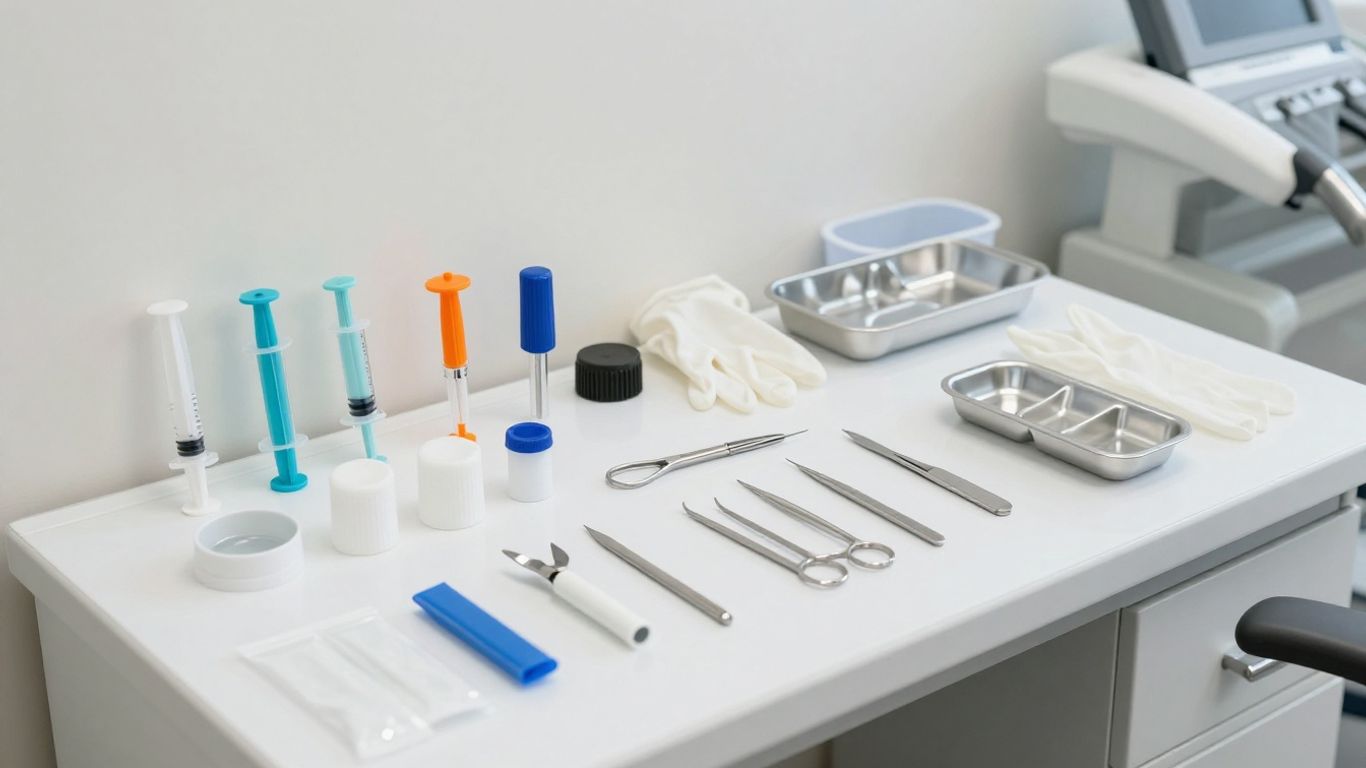
Everyday consumables often determine whether ordering feels efficient or frustrating. Review the availability of items such as anesthetic products, burs, bonding agents, liners, cements, cotton products, barriers, and other materials used throughout the working day. Look for practical pack sizes and clear descriptions so you can order the right product without relying on guesswork.
A store that groups supplies by procedure as well as by category can make routine purchasing easier. You may also find it useful to compare a supplier’s general dental supplies and equipment offering when you are building an initial purchasing list, provided you verify each item against your clinical requirements.
Restorative and impression materials
Restorative and impression materials deserve closer review than a simple count of available brands. Check whether the store provides the material types, setting characteristics, shade systems, packaging, and accessories your clinicians already use. Product information should help you distinguish between similar items and identify any handling or storage requirements.
Compatibility matters here because changing one material can affect instruments, dispensing systems, curing workflows, or laboratory communication. Ask whether technical documentation is available before you replace a familiar product with a lower-priced alternative.
Infection control and personal protective equipment
Infection control supplies should be evaluated as part of a complete workflow rather than as isolated products. Examine the range of surface cleaners, instrument-processing supplies, disposable barriers, masks, gloves, gowns, and other personal protective equipment relevant to your procedures. The store should make pack quantities, intended use, and storage information easy to confirm.
You should also check whether commonly used sizes and specifications are replenished regularly. A supplier may have a large catalog but still be unsuitable if the products your team depends on are frequently unavailable.
Equipment, instruments, and replacement parts
A practice often needs more than consumables. Hand instruments, rotary instruments, small equipment, accessories, and replacement parts can all affect chairside continuity. Review whether the store identifies compatible parts clearly and whether equipment-related purchases come with access to technical information or service pathways.
For Kuwait practices, a distributor that combines products with technical expertise, installation, commissioning, after-sales service, and long-term customer support may be more useful than a product-only source. New Star Company WLL describes this broader healthcare distribution model across specialized divisions, so you can consider the service relationship alongside the catalog itself.
Compare product quality and clinical suitability
A lower price does not make a material suitable, and a familiar manufacturer is not automatically right for every procedure. You should compare performance information, regulatory documentation, handling requirements, and compatibility with the systems already used by your team. The goal is a dependable clinical fit, not simply a longer product list.
Manufacturer reputation and product consistency
Manufacturer reputation can offer a useful starting point, especially when a product is used frequently or affects a critical clinical step. Still, evaluate the actual product documentation, packaging, lot information, and storage requirements rather than relying only on brand familiarity. Consistency from one order to the next is particularly important when several clinicians share the same workflow.
Ask how the store handles product updates and whether staff can clarify differences between revised or comparable products. Consistent product information makes it easier for your team to order correctly and maintain standard operating procedures.
Material certifications and regulatory compliance
For each material, confirm that labeling and documentation are appropriate for its intended clinical use and the regulatory requirements that apply to your practice. Safety data, instructions for use, expiry information, and storage conditions should be available when relevant. A credible supplier should not make you rely on incomplete marketplace descriptions.
Keep a simple record of the documentation you reviewed for frequently purchased materials. This supports purchasing controls, staff training, and internal checks when products or procedures change.
Compatibility with existing systems
Compatibility includes more than whether a product physically fits an instrument. Consider dispensing mechanisms, curing equipment, mixing systems, digital workflows, laboratory processes, and the materials already standardized in your practice. A product that appears economical may create hidden costs if it requires new accessories or additional training.
Before changing a material, ask clinicians and assistants to identify the parts of the workflow that could be affected. Trial quantities can be useful when the supplier permits them, but any evaluation should follow your practice’s clinical and purchasing controls.
Balancing premium products with budget options
Your purchasing policy does not need to place every item in the premium tier. Instead, separate products that directly influence clinical performance from routine items where a compliant, dependable alternative may be appropriate. Compare handling, shelf life, wastage, rework, and staff familiarity as well as the invoice price.
A balanced range can protect quality while keeping recurring costs under control. Review that balance periodically, since a product that is economical at one volume or procedure mix may not remain so after your practice changes.
Assess ordering and fulfillment capabilities
A well-designed catalog is only useful when orders arrive in the expected condition and timeframe. Discuss how inventory is updated, how delivery dates are communicated, and what happens when a requested item is unavailable. Your assessment should reflect real practice pressure, including a sudden shortage before a busy clinical session.
Inventory accuracy and product availability
Ask how the store distinguishes available stock from products that require a supplier order. An accurate stock status helps you plan recurring purchases and avoid discovering a shortage after checkout. You should also examine whether pack sizes, variants, and expiry details are clearly separated in the ordering system.
Track a few frequently used products for several ordering cycles. This gives you a more realistic view of availability than a single successful order.
Shipping speed and delivery reliability
Delivery speed should be assessed together with reliability and order accuracy. A supplier that promises rapid dispatch but regularly sends incomplete or incorrect orders can create more work than it saves. Ask about delivery areas in Kuwait, order cut-off times, tracking, packaging, and procedures for reporting a missing item.
You may want to compare the supplier’s stated delivery process with your practice’s receiving routine. Someone should be able to check quantities, inspect packaging, and store temperature-sensitive or controlled items appropriately when they arrive.
Backorders, substitutions, and urgent orders
Backorders are easier to manage when the supplier contacts you before making a substitution. Establish whether alternatives require your approval and whether the original product remains reserved. For urgent needs, ask who handles escalation and how quickly the team can confirm a realistic solution.
Create a short internal list of materials that cannot be substituted without clinician approval. This prevents a well-intended replacement from entering a workflow where it is unsuitable.
Local pickup and emergency supply options
Local pickup can be useful when a delivery delay would interrupt care, but it should not be assumed. Ask whether pickup is available, which products can be collected, and whether the location and operating hours suit your practice. If emergency supply support is offered, clarify the process before an urgent situation occurs.
A dependable plan may include a small internal reserve for essential consumables, along with a named supplier contact. That combination reduces the temptation to make rushed purchasing decisions.
Review pricing, contracts, and payment terms
The best price is the total cost of acquiring, storing, and using a product. Compare unit pricing, pack quantities, freight, minimum orders, expiry-related waste, and the staff time required to resolve problems. Commercial terms should be clear enough for your practice manager and clinical lead to evaluate together.

Comparing unit prices and bulk discounts
Unit prices can be misleading when pack sizes differ or a bulk discount encourages you to buy more than you can use before expiry. Compare like-for-like quantities and include the likely rate of consumption. A lower per-unit price is helpful only when the practice can use the stock efficiently.
The following comparison can make a purchasing review more disciplined:
| Cost factor | Question to ask | Why it matters |
|---|---|---|
| Unit price | Is the quantity comparable across suppliers? | Prevents misleading price comparisons |
| Bulk discount | Can the practice use the stock before expiry? | Reduces avoidable waste |
| Shipping | Is freight included or charged separately? | Shows the delivered cost |
| Substitution risk | Will an unavailable item require a new purchase? | Exposes workflow disruption |
| Staff time | How much effort is needed to manage the order? | Includes an often-hidden operational cost |
After reviewing the table, calculate the delivered cost for your most frequently purchased items. This gives you a more useful basis for negotiation than a list of advertised discounts.
Evaluating shipping fees and minimum orders
Shipping charges and minimum-order thresholds can change the economics of small, frequent purchases. Ask whether different product categories carry different fees and whether urgent deliveries are priced separately. You should also consider whether a minimum order encourages excess stock in products with a limited shelf life.
A sensible ordering schedule may reduce freight without forcing the practice to overbuy. Keep that schedule flexible enough to respond to changes in appointment volume.
Practice purchasing agreements and recurring orders
Recurring orders can reduce administrative work for stable, high-use products. Before agreeing to one, confirm the product, quantity, price review process, cancellation terms, delivery frequency, and approval limits. Your team should know who can change an order and how substitutions are handled.
For larger healthcare organizations, purchasing arrangements should also align with internal procurement, budgeting, and documentation requirements. New Star Company WLL’s stated role as a healthcare and medical technology distributor, including long-term customer support, is relevant when you are assessing whether a supplier can participate in an ongoing relationship rather than only a single transaction.
Return policies, warranties, and damaged shipments
Read the return policy before placing a substantial order. Check time limits, unopened-product requirements, freight responsibility, and the treatment of products that arrive damaged or with insufficient remaining shelf life. Equipment purchases require separate attention to warranty coverage, commissioning, service response, and replacement parts.
Document damaged shipments with photographs and delivery details as soon as they arrive. A clear process protects your practice and helps the supplier resolve the issue without unnecessary delay.
Look for technology and customer support
Ordering technology should simplify purchasing, but it cannot replace informed support when a clinical or equipment question arises. Assess the online experience alongside the people and processes behind it. You want accurate information at checkout and a reliable route to clarification afterward.
Online ordering and account management
A useful account should let you review order history, download invoices, save approved products, and manage user permissions. These features can reduce duplicate orders and help a practice understand recurring consumption. Check whether multiple locations or departments can be handled without losing visibility over who placed an order.
The system should also make it easy to identify a product’s exact variant. Clear confirmation screens are especially valuable when similar materials are sold in several sizes or configurations.
Product search, filters, and technical documentation
Search tools should support clinical terms, product categories, manufacturer references, and common synonyms. Filters for size, application, pack quantity, and availability can prevent avoidable mistakes. Technical documents should be accessible without requiring your team to search across unrelated pages.
Test the search function with several products your practice already uses. If staff cannot find a familiar item quickly, the catalog may create friction even when its underlying range is extensive.
Support from dental product specialists
A product specialist can help clarify differences in materials, accessories, and ordering requirements, but you should expect answers to remain grounded in current documentation. Ask whether support is available by phone, email, or an assigned representative, and how technical questions are escalated. Response time matters most when the question affects a scheduled procedure or equipment decision.
When evaluating a distributor, consider whether its support model extends beyond the dental catalog. New Star Company WLL positions itself as a Kuwait-based distributor with technical expertise and support across healthcare and medical technology, which may suit organizations seeking a broader local relationship.
Equipment installation, training, and repair services
Equipment purchases should include a clear discussion of installation, commissioning, user training, preventive maintenance, and repair escalation. Confirm which services are provided directly, which are coordinated with the manufacturer, and what is excluded from the quoted price. Ask how service records and warranty claims are handled.