
Key Takeaways
Mindray covers several major areas of medical equipment and laboratory diagnostics, but a successful purchase depends on how well a system fits your facility, staff, workflow, and support plan.
- Review equipment by clinical department and intended use.
- Consider connectivity, training, maintenance, and total cost.
- Assess laboratory systems alongside reagents and consumables.
- Confirm installation, commissioning, compliance, and service arrangements.
- Use demonstrations and post-deployment measures before making a final decision.
Understanding Mindray and its role in healthcare
Mindray is a medical technology company with activities across patient monitoring and life support, in-vitro diagnostics, and medical imaging. For healthcare organizations in Kuwait, understanding that breadth helps you assess whether a device fits a wider clinical or laboratory plan rather than viewing it as an isolated purchase. You should still verify each model’s specification, regulatory status, and local support arrangements before procurement.
Company background and global market presence
Mindray was founded in 1991 and is headquartered in Shenzhen. Its published business areas include Patient Monitoring & Life Support, In-Vitro Diagnostic Products, and Medical Imaging Systems, with a presence described as extending across more than 190 countries. Those facts provide useful context, but they do not replace a local evaluation of availability, lead times, warranty terms, or service coverage.
When you compare an international manufacturer, look beyond geographic reach. Ask how products are supplied in Kuwait, who performs installation and commissioning, how spare parts are handled, and which team provides technical escalation. A distributor with local knowledge can help translate a broad international portfolio into a practical facility plan.
Core healthcare segments served
The three principal segments give you a useful starting framework. Patient monitoring and life support relate to observing patients and supporting care; in-vitro diagnostics concerns testing performed on specimens outside the body; and medical imaging covers systems used to produce diagnostic images. Each segment has different procurement criteria, training needs, and maintenance routines.
You may also need to connect the segments operationally. A hospital could assess monitoring in intensive care, imaging in radiology or point-of-care settings, and laboratory diagnostics as part of one equipment roadmap. The right choice is therefore shaped by patient volume, clinical acuity, available space, information systems, and the skills of your staff.
Hospitals, laboratories, clinics, and veterinary applications
Hospitals generally need equipment that can support multiple departments, consistent workflows, and formal service processes. Clinics may place greater weight on footprint, ease of use, and rapid deployment, while laboratories often focus on throughput, quality control, consumables, and result management. Veterinary facilities require a separate review of intended species, examination patterns, and applicable regulatory requirements.
You should define the setting before comparing models. A device that suits a high-acuity hospital department may be unnecessary for a smaller outpatient clinic, while a compact system may not offer the workflow capacity a central laboratory requires. A local healthcare technology partner can help coordinate product selection with installation, commissioning, training, and after-sales support.
How Mindray’s portfolio supports clinical workflows
A broad portfolio can simplify planning when several departments need equipment from the same manufacturer, but breadth alone is not proof of suitability. You should map each proposed device to a real workflow: patient assessment, image acquisition, specimen processing, result review, documentation, or follow-up care. This approach also makes gaps easier to identify.
For New Star Company WLL, the practical role is to connect healthcare organizations in Kuwait with international technologies while supporting technical evaluation, installation, commissioning, and long-term service. That service layer matters because clinical value depends on more than the device itself. Workflow fit matters most when equipment must be used reliably by different teams across a busy facility.
Exploring Mindray’s main product categories
Medical equipment categories can look straightforward on a brochure but behave differently in practice. Monitoring systems may be used continuously, imaging equipment requires room and operator planning, and laboratory systems depend on specimen flow and consumables. You should examine each category through the lens of the department that will use it.
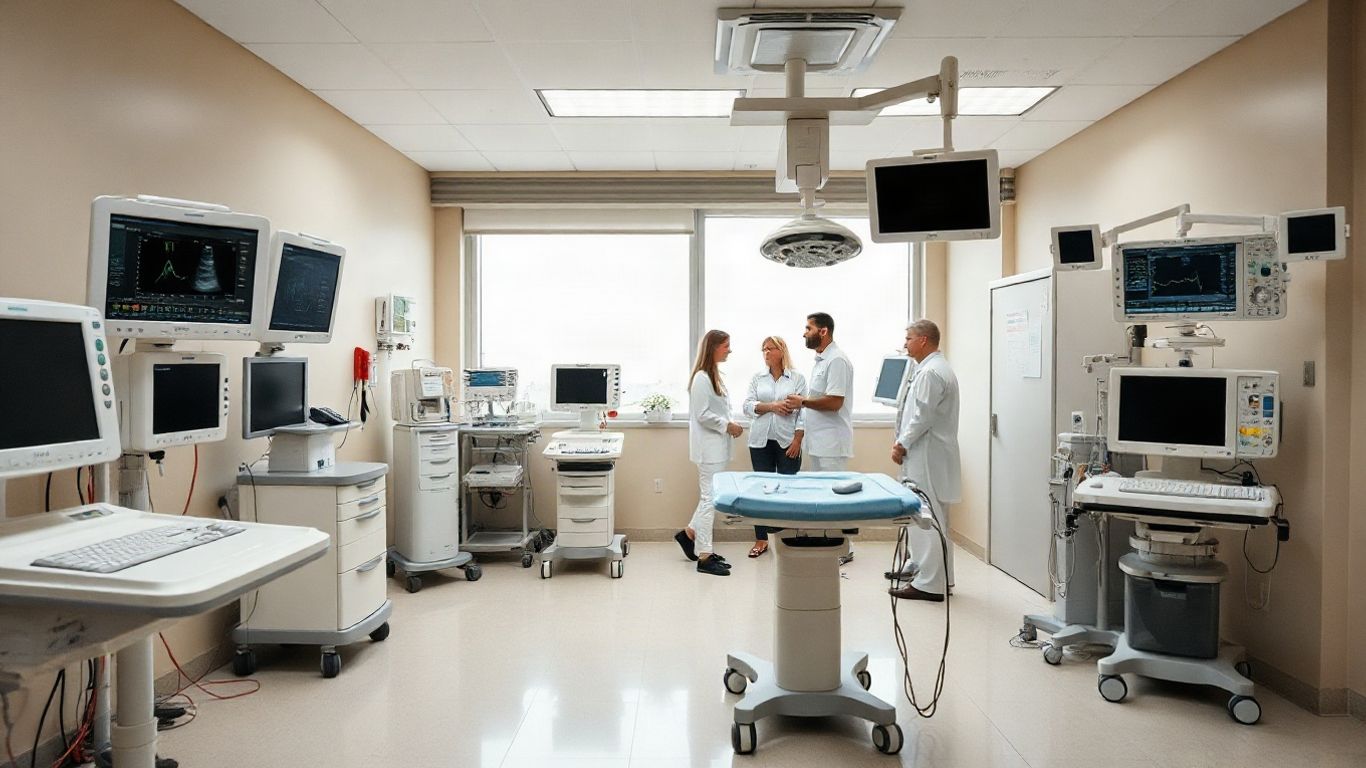 The examples below describe evaluation areas rather than a substitute for model-specific technical documentation. Product names, options, and intended uses should be confirmed through the applicable regional documentation and quotation.
Patient monitoring systems and connectivity
Patient monitoring systems are typically assessed by the parameters they display, the clinical environments they support, alarm management, mobility, and the way information is shared with other systems. You should ask whether the proposed configuration suits bedside, transport, operating room, emergency, or high-acuity use, and whether accessories are included in the planned deployment.
The BeneVision N-Series is described in the available material as providing advanced insights, connectivity, and a modular design for high-acuity care. If you are considering such a system, confirm the exact configuration, supported interfaces, accessories, and local integration responsibilities. Connectivity should be tested in your own network environment rather than assumed from a product summary.
Ultrasound and other medical imaging solutions
Imaging procurement involves more than image quality. You should consider transducer selection, examination types, room layout, portability, cleaning procedures, archiving, reporting, and operator training. Workflow matters particularly when one system will be shared by several specialties or moved between departments.
The Resona A20 is presented in the source material as an ultra-premium ultrasound system built on Acoustic Intelligence Technology. A demonstration should focus on the examinations your clinicians perform most often, the ergonomics of the controls, image review, and how studies move into your existing reporting and archive processes.
Anesthesia and life support equipment
Anesthesia and life support equipment calls for a detailed review of patient population, ventilation requirements, monitoring, alarms, gas infrastructure, backup arrangements, and cleaning. Your clinical and biomedical engineering teams should participate early, since installation conditions and maintenance access can affect operating-room readiness.
For any proposed system, request documentation that defines intended use, supported accessories, consumables, alarm behavior, and service intervals. You should also establish how staff will be trained to recognize faults, switch to backup procedures, and report service needs without interrupting patient care unnecessarily.
In-vitro diagnostics and laboratory systems
Laboratory systems should be assessed as part of a process that begins with specimen receipt and ends with verified results. Chemistry, immunoassay, hematology, and coagulation workflows may have different sample handling, calibration, quality control, and staffing requirements. The analyzer is only one part of the operating model.
A useful comparison includes throughput under your expected workload, loading and unloading steps, reagent storage, repeat testing, maintenance, and result review. You should also consider how the system will fit with laboratory information systems and with the procedures your laboratory already uses for validation and quality assurance.
Operating room and patient care products
Operating-room and patient-care purchases should be reviewed with clinicians, nurses, infection prevention staff, biomedical engineers, and facilities teams. Consider positioning, access, cleanability, electrical requirements, accessories, and how the equipment will be moved or stored. Small design details can affect turnover time and staff effort.
A complete specification should distinguish required features from preferences. It should also identify what is included in the base quotation, which accessories are optional, and how replacements will be sourced. This reduces surprises when the equipment reaches the department and the working environment exposes practical constraints that were not visible in a catalog.
Evaluating Mindray equipment for clinical needs
A clinical equipment decision is strongest when it starts with a defined need rather than a preferred product name. You should document who will use the equipment, where it will be used, what decisions it must support, and how success will be measured. The same model may be appropriate in one department and poorly matched to another.
Matching devices to department requirements
Begin with a written user requirement specification. Include patient population, workload, environment, clinical applications, staffing, space, power, cleaning, and emergency or backup expectations. Invite representative users to review the draft so that the specification reflects actual practice rather than only procurement language.
It is useful to separate mandatory requirements from desirable ones. This lets you compare quotations fairly and prevents an attractive additional feature from distracting you from core performance, serviceability, or safety needs. It also gives suppliers a clear basis for demonstrations.
Comparing features, performance, and usability
A feature comparison should connect each feature to a task. For example, ask how a control reduces steps, how a display supports decision-making, or how an accessory affects setup time. During a demonstration, have intended users perform representative tasks instead of watching a polished presentation.
Record practical observations while they are fresh. The following points are especially useful during a structured evaluation:
- Time required for setup, patient preparation, or specimen loading.
- Clarity of displays, prompts, alarms, and result review.
- Ease of cleaning, disinfection, storage, and routine checks.
- Training time for new and experienced staff.
A short, repeatable scoring method helps you distinguish measurable differences from personal preference. You should retain the demonstration checklist with the procurement record so that the final decision can be explained to clinical and administrative stakeholders.
Assessing interoperability with existing systems
Interoperability should be treated as a project requirement, not a late technical detail. Identify the systems that must exchange information, the data elements involved, user authentication needs, network responsibilities, and any middleware or interface work. Include your information technology, clinical engineering, and vendor teams in the discussion.
Ask for interface documentation and define who will configure, test, validate, and support each connection. A device may have a stated connectivity capability, yet the final result can still depend on local network architecture, licensing, cybersecurity controls, and the performance of the receiving system.
Considering scalability for growing facilities
Scalability can mean additional devices, expanded departments, higher test volumes, new users, or future system connections. You should ask whether the proposed configuration can grow without forcing a complete replacement, and whether expansion will require new infrastructure or additional software.
Plan for realistic growth rather than every possible scenario. A phased purchase may reduce initial capital pressure, but only if the first phase preserves a clear path for validation, training, service, and data continuity. Document those assumptions in the project plan and quotation.
Understanding Mindray laboratory diagnostics
Laboratory diagnostics combines instruments, reagents, consumables, people, procedures, information systems, and quality management. A capable analyzer cannot compensate for poorly controlled specimen handling or an unsuitable workflow. You should therefore assess the laboratory as a complete operating system, from accessioning to result release.
 The laboratory’s current and projected workload should guide the conversation. Review peak demand, test mix, turnaround expectations, staffing patterns, available bench or floor space, and the level of automation that can realistically be supported.
Chemistry and immunoassay analyzers
Chemistry and immunoassay assessment starts with the test menu and expected workload. You should examine sample requirements, calibration, quality control, reagent storage, maintenance, repeat testing, and how urgent samples are prioritized. Throughput should be considered in relation to your actual workload profile, not only a headline figure.
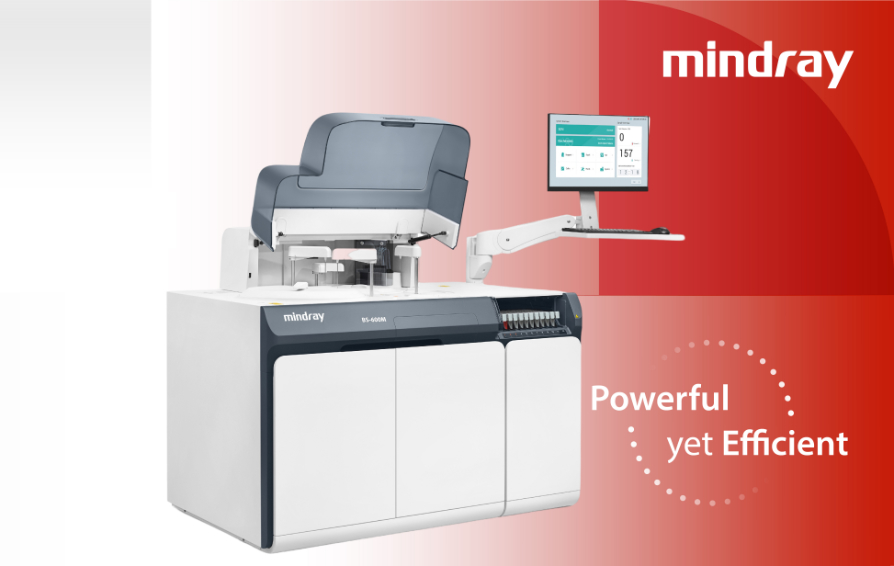
Mindray Laboratory Diagnostics materials describe scalable, automated systems intended to optimize workflows, with references to biochemistry close systems and SF Cube cellular analysis. Treat those descriptions as a starting point for a model-specific review. Confirm the exact assays, performance information, consumables, workflow options, and regulatory documentation relevant to your laboratory.
Hematology and coagulation systems
Hematology and coagulation systems require attention to specimen integrity, sample identification, flagging, repeat rules, calibration, and review by qualified staff. Your laboratory should define which results can be released automatically and which require manual assessment or reflex testing.
Evaluate how routine and urgent samples move through the department. Also review maintenance steps, waste handling, reagent stability, and the procedure for managing downtime. A system that appears efficient on paper still needs to fit the laboratory’s staffing and quality procedures.
Reagents, consumables, and workflow requirements
Reagents and consumables influence cost, continuity, storage, waste, and daily workload. Ask for a complete list of required items, storage conditions, shelf-life information, ordering lead times, and any controls or calibrators needed for routine operation. These details should be included in the financial model rather than treated as minor accessories.
You should also identify what happens during delayed delivery or unexpected demand. A documented replenishment process, suitable stock policy, and clear escalation route can reduce interruptions. Local service and supply arrangements deserve the same attention as analyzer specifications.
Quality control and laboratory efficiency
Quality control should be considered alongside efficiency. Faster processing is useful only when results remain within the laboratory’s validated quality framework. Define the control materials, review frequency, acceptance rules, corrective actions, and records required by your internal procedures and applicable regulations.
Efficiency can then be measured more meaningfully. Look at hands-on time, repeat rates, turnaround time, reagent use, downtime, and workload distribution. A baseline taken before installation gives you a fair comparison after implementation.
Integrating diagnostic data into laboratory information systems
Laboratory information system integration should cover patient and sample identification, orders, results, flags, comments, corrections, and audit trails. You should agree on interface testing, validation responsibilities, user permissions, and downtime procedures before go-live.
The laboratory, information technology team, and supplier should jointly test normal, exceptional, and recovery scenarios. Do not limit testing to a successful result transmission. Include mislabeled samples, canceled orders, amended results, communication failures, and the reconciliation process after a system outage.