
How to Evaluate Dental X-Ray Equipment Before Buying: A Buyer's Guide for Kuwait Clinics
🗓️ Published: October 24, 2026 · 🏢 New Star Company WLL · 🏷️ Dental Equipment · Imaging · Kuwait Clinics · Author: Fadi
Choosing the right dental X-ray equipment in Kuwait is one of the most consequential procurement decisions a clinic owner or practice manager can make. Imaging systems sit at the center of diagnosis — every treatment plan, referral, and follow-up depends on the quality, reliability, and workflow compatibility of your radiographic setup. Yet the purchase process is rarely straightforward: the market offers a wide range of system types, sensor technologies, and software platforms, each with different implications for your clinic's space, staff training requirements, and long-term operating costs. This guide is designed to help Kuwait-based dental clinics approach that decision with a clear, structured framework — before a sales conversation begins.
Understanding the Main Types of Dental X-Ray Equipment in Kuwait Clinics
Before evaluating specifications, procurement teams should be clear on which imaging modality — or combination — the clinic actually needs. The three most common systems found in Kuwait dental practices are:
Intraoral X-Ray Systems — These are the workhorse units used chairside for periapical, bitewing, and occlusal images. They are compact, fast, and suited to virtually every general dentistry workflow. Key considerations include arm positioning range, tube head stability, and compatibility with digital sensors or phosphor plate systems.
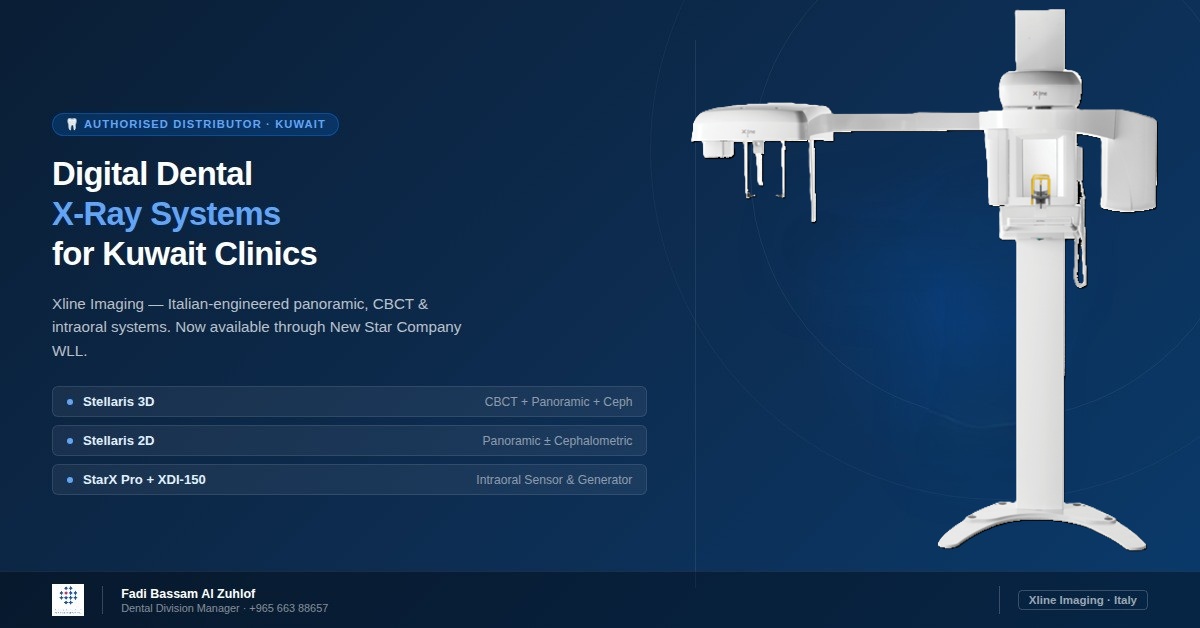
Panoramic (OPG) Units — Panoramic radiography provides a broad view of the full dental arch, jaws, and surrounding structures in a single exposure. These units are standard in multi-chair clinics and are frequently required for orthodontic assessment, implant planning, and oral surgery workups. Space and dedicated room shielding are prerequisites.
CBCT (Cone Beam CT) Systems — CBCT offers three-dimensional imaging and is increasingly used in implantology, endodontics, and complex surgical planning. These are significant capital investments and require dedicated space, radiation shielding, and trained operators. Many clinics in Kuwait opt for shared CBCT access through referral partners rather than in-house ownership.
Understanding your case mix — the proportion of general dentistry, orthodontic, surgical, and implant cases — is the starting point. A high-volume general clinic has different imaging priorities than a specialist oral surgery center.
Key Technical Specifications to Evaluate for Dental X-Ray Equipment
Once the system type is determined, the evaluation moves to technical parameters. The following are the areas that matter most in a clinical procurement context — regardless of brand or price point.
Sensor Technology and Image Quality
Digital dental imaging systems use either solid-state sensors (direct digital) or photostimulable phosphor (PSP) plates. Solid-state sensors deliver images immediately and are more durable in high-volume settings; PSP plates are flexible and may suit clinics with constrained budgets or difficult patient anatomy. Evaluate the effective sensor area, resolution characteristics, and how the system handles image processing — consistent, diagnostically adequate images reduce retakes and exposure.
Radiation Dose Management
Modern dental X-ray systems are designed to minimize patient dose while maintaining diagnostic image quality. When evaluating equipment, ask suppliers about the exposure settings available, whether the unit supports rectangular collimation (which reduces the exposed area significantly), and whether it carries recognized international safety certifications. This is especially relevant for pediatric patients and high-frequency imaging workflows.
Software and Workflow Integration
Imaging hardware is only as useful as the software environment around it. Confirm that the system integrates with your practice management software, that DICOM compatibility is supported for image storage and referral, and that the acquisition interface is intuitive enough for staff to use without extended training. Proprietary software ecosystems can create lock-in, so understand the long-term support and update commitments before signing.
Operational and Supplier Factors Kuwait Clinics Should Not Overlook
Beyond the equipment itself, the procurement decision involves a supplier relationship that will affect your clinic for years. In the Kuwait market, the following operational factors deserve as much attention as the technical specifications.
After-Sales Support and Service Availability: Dental imaging equipment requires periodic calibration, sensor replacement, and occasional technical service. Before purchasing, confirm that the supplier has qualified service engineers available locally in Kuwait, that spare parts are held in-country rather than imported on demand, and that response times for service calls are clearly defined in the agreement.
Warranty Terms: Warranty coverage for dental X-ray systems varies widely between manufacturers and models. Understand exactly what is covered — hardware failures, sensor replacement, software updates — and for what duration. Negotiate extended warranty or service contracts as part of the purchase discussion, not as an afterthought.
Installation and Training: A professional installation that includes proper wall-mounting, arm calibration, and connectivity setup is essential for system performance. Factor in whether the supplier provides staff training on acquisition technique and software operation, and whether that training is repeated when staff changes occur.
Regulatory Compliance: Dental X-ray equipment in Kuwait must meet applicable radiation safety and importation requirements. Work only with suppliers who provide properly documented equipment and can support you in meeting any local authority requirements. Ask for documentation of the unit's international certifications and confirm that it is appropriate for use in your jurisdiction.
Looking for Dental X-Ray Equipment in Kuwait?
New Star Company WLL supplies dental imaging equipment to clinics across Kuwait. Contact us to discuss your clinic's requirements.
Get in TouchQuestions to Ask Before You Commit to a Purchase
A structured list of questions to your potential supplier can reveal a great deal about both the product and the company behind it. Consider asking:
- What is the expected operational lifespan of this system under our projected daily usage volume?
- Is sensor replacement available locally, and what is the lead time if a component fails?
- Can the software be integrated with our existing practice management platform, and at what cost?
- What does the warranty cover, and what are the terms of any available service agreement?
- Are reference sites available — existing Kuwait clinics using this equipment — that we can speak with?
- What radiation safety documentation and certifications accompany this unit?
Suppliers who are confident in their products will answer these questions clearly and provide documentation. Vague answers or reluctance to provide references are worth noting.
Frequently Asked Questions: Dental X-Ray Equipment in Kuwait
Q: What is the difference between a digital sensor and a phosphor plate system for intraoral X-rays?
A: Digital sensors (solid-state) provide immediate image capture and are more durable in high-throughput environments, but are rigid and come in fixed sizes. Phosphor plates are flexible and reusable, making them more adaptable for patients with limited mouth opening or unusual anatomy, though they require a separate scanning step before images appear. The choice depends on your patient volume, case mix, and budget.
Q: Does a Kuwait dental clinic need a separate room for panoramic X-ray equipment?
A: Panoramic units generally require a dedicated space with appropriate radiation shielding — typically a separate room or a partitioned area within the clinic. The specific shielding requirements depend on the unit's output and local authority guidance. Your supplier should provide a room planning guide, and you should confirm requirements with the relevant authorities before installation.
Q: How do we evaluate whether after-sales support for dental X-ray equipment is reliable in Kuwait?
A: Ask the supplier directly about their local service infrastructure — whether they have in-country engineers, local parts inventory, and a defined service response timeframe. Request references from existing Kuwait clients and follow up with those clinics. A supplier with an established local presence and referenceable customers in your market is a significantly lower risk than one relying on overseas service dispatch.
Selecting the right dental X-ray equipment for your Kuwait clinic is a process that rewards preparation. Clinics that invest time in understanding their imaging needs, asking the right questions, and evaluating suppliers as carefully as they evaluate equipment consistently make better long-term decisions. If you would like to discuss your clinic's imaging requirements with an experienced local supplier, contact New Star Company WLL — we are based in Kuwait and work with dental clinics across the country.
Disclaimer: This article provides general guidance for educational purposes only. Equipment specifications and regulatory requirements vary — consult a qualified supplier and relevant authorities before making purchasing decisions.
Sources & References
- American Dental Association (ADA) — Dental radiographic examinations: recommendations for patient selection and limiting radiation exposure. ada.org
- European Commission — Radiation protection: cone beam CT for dental and maxillofacial radiology. ec.europa.eu
- FDA (U.S. Food & Drug Administration) — Dental X-ray equipment guidance. fda.gov
- Kuwait Ministry of Health — Regulations for radiology equipment in licensed medical facilities. moh.gov.kw
- International Atomic Energy Agency (IAEA) — Radiation protection in dental radiology. iaea.org